Meetmethodiek EEG en eyetracking
Meetmethodiek EEG en eyetracking
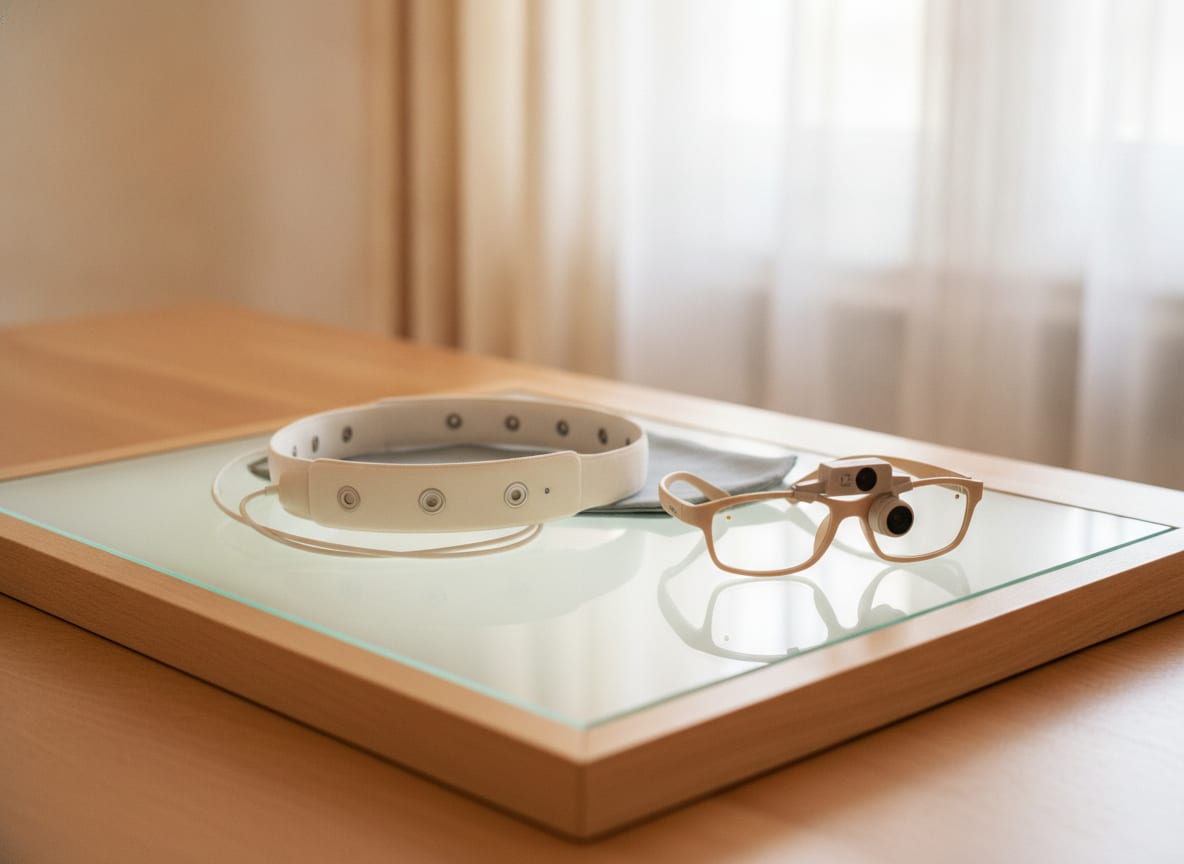
Within Brain Wellness, we use EEG and eye tracking as complementary measurement methods to gain insight into attention, focus, sensory processing, and mental workload. By measuring at multiple points in time, changes can be tracked throughout a trajectory.
Information requestEEG and eye tracking are used within Brain Wellness to gather complementary information regarding attention, focus, sensory processing, and mental workload.
The measurements do not stand alone. They are combined with personal guidance and the context in which someone works. This creates a broader picture that helps determine more purposefully where attention or change is needed.
What is EEG?
EEG stands for electroencephalography. Sensors record the brain's electrical activity during the measurement.
Within Brain Wellness, we use this information as an additional source to better understand patterns concerning mental workload, attention, and responses to stimuli.
What is eye tracking?
Eye tracking records where a person looks and how their attention shifts during a task.
This can provide complementary information about focus, attention distribution, and the way visual information is processed.
What can the measurements reveal?
Depending on the trajectory, we look at factors including:
- attention and focus;
- sensory processing;
- mental workload during tasks;
- responses under pressure;
- changes between different measurement points.
The results are always discussed in connection with your personal situation and the objective of the trajectory.
Why multiple measurement points?
A single measurement primarily provides a snapshot. Therefore, Brain Wellness works with three measurement points where appropriate.
Baseline measurement
At the outset, we establish the starting point and determine which focal points are relevant for the remainder of the trajectory.
Intermediate measurement
Halfway through, we review what developments are visible and whether adjusting the guidance is advisable.
Final measurement
At the conclusion, we compare the results with earlier measurement points and discuss what changes are visible and what remains important moving forward.
From measurement data to clear insight
You will not receive a collection of technical graphs without explanation. The results are translated into clear, accessible information tailored to your personal or professional situation.
In doing so, we look not only at measurement data, but also at your personal experience and what changes in daily practice.
No medical diagnosis or assessment
The EEG and eye tracking measurements within Brain Wellness are not intended for medical diagnosis and do not replace examination or treatment by a physician or other healthcare provider.
The measurements are also not used to compare, rank, or evaluate individuals against one another.
Personal data remains personal
We establish clear agreements in advance regarding the purpose of the measurements, the use of the results, and who has access to which information.
Within Brain Wellness Board or Team, individual information remains strictly confidential. Any group-level feedback is provided exclusively in accordance with prior agreements.
Which Brain Wellness approach is right for you?
The measurement methodology can be applied within Brain Wellness 1-on-1, Brain Wellness Board, and Brain Wellness Team.
During an intake, we will discuss which approach suits your situation and what you can expect from the measurements.
FAQ
We measure signals associated with stress reactivity, sensory processing, and attention patterns. This helps determine whether the brain becomes calmer over time.
Because this allows you to make adjustments midway through and secure results at the end. You prevent discovering only afterwards that something is not working.
No. The purpose is insight and adjustment throughout the process, not diagnosis or labeling.
This is agreed upon in advance. In 1-on-1 sessions, you decide what you share. In board/team settings, you work with agreements on what remains individual and what is shared at the group level.
You will receive a report with patterns and priorities, plus an advisory roadmap with next steps for intervention and safeguarding.